
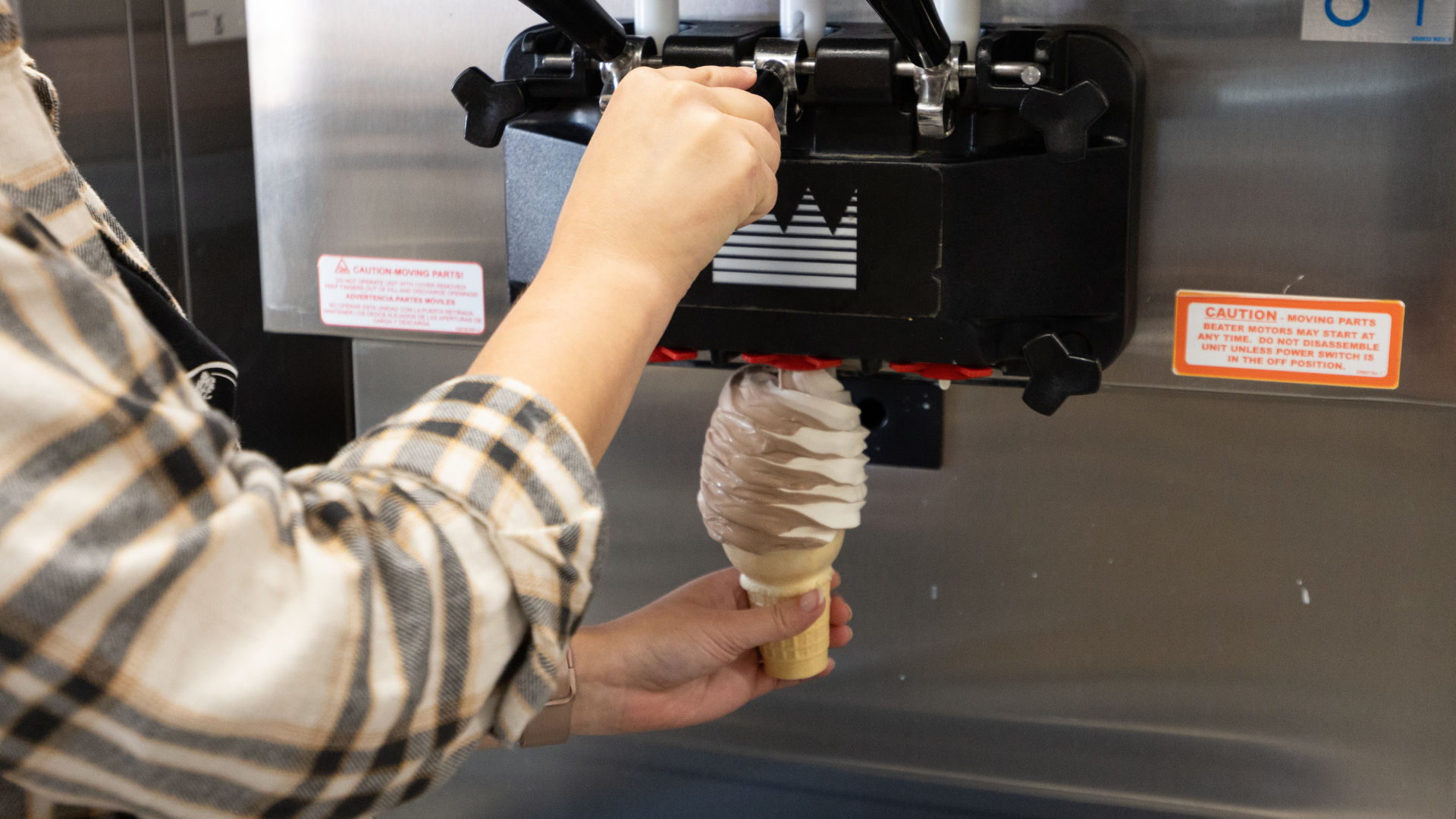
Why Air Matters More Than You Think in Soft Serve
Soft serve may look simple at the point of dispense, but its signature texture is the result of a carefully balanced process. One of the most influential—and often overlooked—elements is air. The way air is incorporated into the mix affects not only mouthfeel and flavor delivery but also portion control and operational efficiency.
This controlled introduction of air is known as overrun, and for operators focused on consistency and quality, it is one of the most important variables to understand.
Defining Soft Serve Overrun
Overrun refers to the increase in volume that occurs when air is introduced into liquid ice cream mix during freezing. Expressed as a percentage, it reflects how much the product expands compared to its original liquid state.
In commercial soft serve applications, overrun typically falls within a moderate range to balance lightness and body. The goal is not maximum expansion, but repeatable, controlled incorporation of air that delivers a smooth, stable product from the first serving to the last.
How Overrun Influences Texture and Flavor Perception
Air plays a direct role in how soft serve feels on the palate. Properly managed overrun creates a lighter structure that melts evenly and delivers flavor smoothly. When air levels are inconsistent, texture issues tend to follow.
Compared to hard ice cream, soft serve contains more air and is served at a higher temperature, which explains its softer consistency. However, too much air can dull flavor and cause rapid melting, while too little can produce a heavy or icy result. Maintaining balance is key to meeting customer expectations. Too much air can also make product feel hollow, while too little can result in a heavy or icy texture.
Proper Air Incorporation Affects
- Mouthfeel: Balanced overrun creates a smooth, airy texture without foaminess
- Flavor Perception: Even air distribution allows flavors to release gradually rather than tasting diluted or flat
- Melting Behavior: Consistent overrun helps soft serve melt evenly rather than collapsing or becoming watery
Overrun & Its Impact on Yield and Cost Control
From an operational standpoint, overrun also affects serving yield. When air is incorporated consistently, operators can achieve predictable portioning and more reliable output from each bag of mix.
When Overrun is Held Steady
- Operators can predict how many servings each bag of mix will produce
- Portion control becomes more accurate
- Cost-per-serving remains consistent
Excessive overrun may increase serving count but often compromises product quality. Insufficient overrun can reduce yield and strain equipment. Finding the right balance allows operators to protect both quality and margins without sacrificing one for the other.
Measuring and Managing Overrun in Daily Operations
Overrun is commonly evaluated by comparing the weight of frozen product to the original liquid mix. A lighter finished product indicates greater air incorporation. While the calculation itself is straightforward, maintaining consistent results requires attention to machine setup and operating conditions.
Key Factors that influence Overrun
- Mix delivery rate
- Freezing temperature
- Cylinder pressure and agitation
- Equipment cleanliness and calibration
Commercial soft serve machines are designed to hold these variables steady once optimal settings are established, helping operators avoid frequent adjustments.
When Overrun Falls Outside the Ideal Range
Imbalances in overrun often show up in the finished product. Common issues include:
- Too much air: Weak flavor, rapid melting, foamy appearance
- Too little air: Dense texture, icy mouthfeel, uneven dispensing
These inconsistencies can confuse customers and lead to unnecessary product waste. When these issues arise they are usually a signal to review machine settings, environmental conditions, or maintenance schedules. Small, incremental adjustments—combined with regular maintenance—help keep product within specification.
Adjusting for Different Products and Conditions
Not all frozen desserts are designed to perform the same way. Different mixes respond differently to air incorporation. Custards and frozen yogurts often use lower overrun to create a richer mouthfeel, while traditional soft serve benefits from a lighter structure.
Environmental factors also play a role. Changes in ambient temperature, humidity, or seasonal demand can affect how a mix freezes. Equipment that maintains stable freezing conditions helps operators adapt without sacrificing quality.
Equipment Design and Overrun Consistency
Reliable overrun control depends on consistent freezing performance. Machines engineered for commercial use are designed to regulate viscosity, temperature, and mix movement throughout the freezing cycle.
When these systems work together, operators can expect uniform texture and repeatable results across shifts and seasons. Equipment stability reduces the need for constant monitoring and helps maintain customer confidence in the product.
Finding the Right Balance
Understanding soft serve overrun is about more than technical curiosity—it is about delivering a product that meets expectations every time. When air content is managed correctly, soft serve achieves the balance customers recognize as smooth, creamy, and satisfying.
Taylor Arizona supports operators by providing commercial soft serve equipment designed for consistency, along with distributor-backed training and service. This combination helps businesses fine-tune overrun, protect product quality, and operate with confidence as demand grows.